
- Private & confidential service
- Genuine medication
- All-inclusive service - No hidden fees
- Next day delivery
Hair Removal
Start your consultation


- Reduces facial hair
- Easy to use cream
- Long-term option
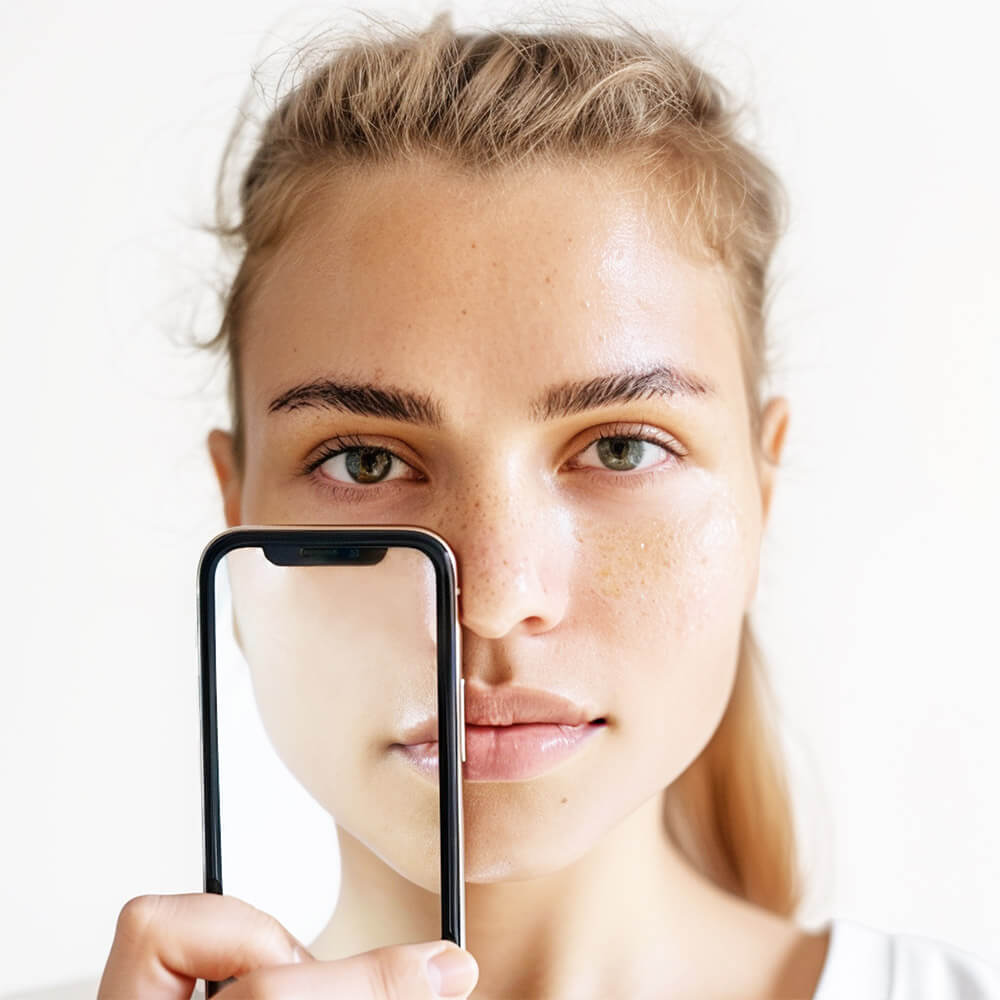
- Identify and treat skin conditions
- Convenient from your home
- Results in 1 working day
Hair Removal
Facial hirsutism, or excessive growth of female facial hair, affects 1 in 10 women in the UK. It usually presents on the face or chest. However, hirsutism can also occur on the lower back, neck, lower stomach (in particular the pubic line), thighs and buttocks, with acne or seborrhoea often appearing alongside.
You can begin your consultation for hair removal cream Vaniqa below. Alternatively, if you would like more information regarding the condition, you can navigate through the page to understand the causes, symptoms and treatment options available for hirsutism.
Topics

What is hirsutism?
Hirsutism (excessive hairiness) is diagnosed when a woman experiences excessive hair growth in areas usually unaffected by the androgenic effects on hair. Hair around the lips, chin, chest and armpits may be noticeably darker, thicker and coarser than terminal hair.
Hirsutism can also occur on the lower back, genital area, legs and buttocks, though in women it most commonly occurs on the face and chest. Excessive female facial hair, known as facial hirsutism, often occurs alongside acne or seborrhoea.

Hirsutism may potentially be an indication of an underlying condition, such as polycystic ovary syndrome, which can cause infertility in later life. Therefore, it is important to talk to a qualified doctor, if you believe you have hirsutism.
When is facial hair removal necessary?
This is something that is subjective and only the patient can really decide. Some women who experience hirsutism will not consider it necessary to undergo a particular treatment in order to reduce or eliminate their excess facial hair with waxing or the use of tweezers sufficing. Other women on the other hand with more severe versions of the condition may find the experience very distressing especially in social situations.
The degree of your hirsutism in most cases will likely have an effect on which treatment method is chosen; for example less severe cases will likely require only a mild hair removal method such as shaving, waxing or bleaching.
When to speak to a doctor
As they are not always seen as harmful to your health, some people with these conditions may have experienced a negative attitude or reception. Although most doctors will have an understanding of the psychological issues, they may not be as understanding as someone who has extensive training in the psychological field. If you have experienced this sort of reaction, then it is worth remembering that there are help groups, like Verity that exist specifically to support people who have PCOS. Voicing your concerns is the best way to ensure that you receive the help you deserve.
What are the causes of hirsutism?
When puberty occurs a girl's body starts to produce a mixture of female and male hormones, due to the function of the ovaries and the menstrual cycle, the female hormones are usually greater in the woman resulting in less hair around the body compared to men. If there is an imbalance in this process and there is a higher amount of male hormones (androgen) then this can be a primary cause for excess facial hair in women. Other possible causes include:

Some women will experience idiopathic hirsutism, which occurs when there is no medical explanation for the development of the condition. In this case, it is up to the woman to decide what cause of treatment is necessary if at all.
|
|
|


Will losing weight help me reduce hirsutism?
Research shows that being in control of your weight can help reduce the symptoms of hirsutism. Losing weight reduces the production of androgens and therefore the amount of hair your body grows. It has also been suggested that the sorts of food you eat could help control excessive hair growth. A high intake of vitamin B, lots of protein and foods that contain magnesium such as avocados, nuts and fish, can help. Drinking spearmint tea and eating fewer carbs (but not cutting them out entirely) have also been found to improve symptoms.
What are the symptoms of hirsutism?
Hirsutism is when a female has excessive hair growing in various areas of their body, including the face (e.g. chin and upper lip), tummy, chest, neck, thighs, and genital region. The hair itself is usually thick and dark, as opposed to fine and fair. There are also other symptoms, when diagnosing hirsutism. These include the following:
- Acne - appearing on the face, back, or chest
- Oily skin
- Change in voice - i.e. a deeper voice
- Receding hair line
- Enlarged clitoris - a small, soft bump appearing on the entrance to the vagina
How can I treat hirsutism?
The hair removal treatment option you choose will likely depend on the severity of your hirsutism and how much of an effect it has on you personally. While these methods can't be considered a cure, they can help to treat the primary effect of hirsutism, which is excessive hair growth.

Self-administered solutions
These hair removal methods include shaving, bleaching, plucking, waxing and threading. Depilation is also a method that can be undertaken individually. These methods may be suitable for milder cases, but they are only effective in the short-term. It may be necessary to shave every day, for example. Methods such as shaving, bleaching and depilation may irritate your skin, while plucking, threading and waxing can be uncomfortable.
Does shaving make the hair darker and thicker?
This is a myth; shaving does not lead to the hair growing back thicker or darker. However, shaving does mean the hair will grow back with a blunt tip - and may, therefore, appear thicker. This is why the regrowth feels 'stubbly' and may seem more noticeable than the hair that was there before. This is a good reason many women avoid shaving areas such as the face.
Long-term and permanent hair removal solutions
Laser treatment and electrolysis are two methods, which provide more of a long-term solution to hair removal. Electrolysis can be permanent, but it can also be painful, as it involves passing an electrical current through a needle and into a hair follicle in order to damage it. This can be an extremely effective method, but it can also be dangerous if it is not performed by a trained and registered professional. Laser treatment involves the use of laser lights to achieve the same outcome as electrolysis, which is to damage the hair follicles. As with electrolysis, laser treatment is a potentially dangerous treatment, and so it is important that you make sure that your practitioner is fully qualified. Both of these options are usually fairly expensive.
Medical and prescription treatments
In the first instance, your doctor will likely prescribe an anti-androgen such as the contraceptive pill to you if you currently have hirsutism and have not yet started menopause. Anti-androgens are able to block the activity of androgens, such as those that cause excessive female facial hair. These medications can be effective, and provide facial hair reduction qualities, but they often take as many as six months to work and the effects will likely return if you stop taking them.
The combined oral contraceptive pill is the best birth control you can use for hirsutism. This includes one of the most popular pills, Yasmin. Whilst the combined contraceptive may still take about 6 months to work, this is still the most common treatment for hirsutism. Another type of contraceptive - although more closely related to acne treatment - is co-cyprindiol. It is always advised to talk to your doctor before starting treatment.
You may also consider a hair reduction cream such as Vaniqa, which can be ordered by following the steps below. Vaniqa cream is clinically proven to effectively reduce excessive facial hair growth on women, without the side effects and significant cost associated with some of the various methods mentioned above. This form of treatment comes with little to no risk of side effects and is easy to apply.
Herbal supplements for hirsutism
There are certain herbal remedies that could potentially help reduce facial hair growth, however with herbal supplements, research can be slightly inconsistent. The University of Maryland Medical Centre have stated that chaste tree, spearmint tea, palmetto and black cohosh could all help the condition, as well as cinnamon or green tea.
What are the methods for preventing hirsutism?
While there aren't any obvious preventative measures to follow for hirsutism, you can take into account some of the lifestyle changes that can help to reduce the chance of developing hirsutism. There aren't necessarily any clinical studies to prove the effectiveness of these methods, but they may make a difference. Different women will likely experience differing levels of effectiveness when trying these methods.
- Using skin cream, such as E45
- Adjusting your diet by eating more nutritional food
- Exercising more regularly
- Drinking organic tea - e.g. spearmint tea
- Waxing areas of hirsutism regularly
- Controlling obesity, if you have polycystic ovary syndrome
- Using natural herbal remedies that include the ingredient; turmeric. These can be made at home
- Certain birth control treatments (used in the prevention of pregnancy) that lower levels of androgens in your system may lower the risk of hirsutism
- Avoiding certain drugs that can cause hirsutism, such as Danazol (Danocrine)
- Drugs that encourage hair growth, such as Rogaine (minoxidil) should also be avoided
What options do we offer to treat hirsutism?
Vaniqa is clinically proven to effectively treat excessive facial hair growth in women. This is a hair cream medication, which can be rubbed into the skin in order to slow down the growth of hair, eventually making it less visible as it becomes shorter and finer. Vaniqa may be prescribed for female facial hair removal if other treatments have proved ineffective.
Using Vaniqa cream can significantly increase the confidence of all women who use it, which can furthermore aid psychological factors associated with hair loss, such as stress and depression. Vaniqa is also approved by UK qualified doctors and can be obtained quickly and securely online by completing our free, quick, and simple online consultation.
3 simple steps to get you started


